This is Part II of a two-part series on turnout. I highly recommend you readPart I first. It explores the purpose of turnout in dance, the anatomy of outward rotation at the hip joint, and recognizing false or improper turnout.
Here in Part II are three ways in which a dancer can nurture their ability to turnout and to actively maintain that rotation during movement — Awareness, Release, and Strengthen Without Tension.
Awareness
Photo by Sally M
Awareness comes from developing an understanding of how the body, or specifically the hip joint in this case, works. We’ve talked about this in Part I. And then adjusting or bringing attention to the way you think as a result of this understanding.
The number one problem for students struggling with turnout is that often they are thinking about what they see happening to the pelvis rather than what is occurring in the joint. Teachers can help their students develop x-ray vision by discussing the actions of the joint in anatomical terms. Many students do not even have a clear picture of how their bones and muscles look so keep in mind that diagrams can be very helpful.
Of course, accuracy with terminology is great also, but what students really need to understand are the concepts behind what the bones and muscles are doing. This is far more helpful than talking about visual imperfections like “lifting hips” which occur when students are not properly using their turnout.
Use mental imagery to aid in this kinesthetic understanding.
For instance, in her article Turnout is a Verb (which is sadly no longer online), Linda Kjesbu suggests imagining the quadriceps “as you would a barber shop pole that continually rotates up and out, around the leg.” This image hints at the idea of upward lengthening and outward rotation of the whole leg – a different picture and feeling all together than opening the feet like a book or in the shape of a slice of pizza, which is only what we see happening on the outside.
In Conditioning for Dance, Eric Franklin uses the image of the pelvic floor opening like a fan in turnout. With this tool one can visualize that the sitz bones come together as the femurs open away from each other. Attention is drawn to a very important portion of the body – the base of the centre – which will help students begin to harness the power of the pelvis in jumping, leaping, and other movements.
Use tactile information (sense of touch) to bring about awareness.
Encourage students to find bony landmarks on themselves and one another. Find ways to isolate certain muscles through manipulation and touch while encouraging the use of mental pictures. Again, I will highly recommend Conditioning for Dance as a wonderful reference for this type of sensory learning. You will also find a variety exercises with bands and balls targeting specific areas of the body. For an in-depth understanding and analysis of joint and muscle actions, I constantly refer to Sally Fitt’s Dance Kinesiology. These make excellent additions to a teacher’s dance library.
Release
Too much tension in the musculature around the hip joint is often responsible for limiting the degree of turnout. Therefore, releasing that tension is key if you’d like to improve outward (and inward) rotation. Tight inward rotators inhibit outward rotation and visa versa. Dancers have varying methods which they use to accomplish release in the hips. Some use passive and lengthening stretches and others utilize props like balls to facilitate an opening within the joint.
A common stretch for the inward rotators is the prone (face-down) frog. In this stretch it important to avoid forcing or pushing the turnout of the hips because doing so can damage the tissues and ligaments surrounding and leading from the hip. A more gentle and effective version of the frog can be done lying supine (face-up). You might also try a less passive version: While lying, point both knees to the ceiling. Open one knee toward the floor and press down with this leg, lifting the thigh, hips and lower spine off the floor. Maintain this press and lift the opposite leg off the floor so that only the rotated leg and the shoulders are supporting the body. Hold this for 20-30 seconds (breathe!) and then release and lie with both knees open wide, then repeat with the other leg. This utilizes reciprocal inhibition, a method of increasing flexibility favored by dance medicine specialists.
Strengthen Without Tension
Many dancers have more turnout capability than they are able to use because they lack the strength in their outward rotators and supporting muscles to fully open and maintain turnout in the hips. Strengthening these muscles is a gradual process and can be done primarily during technique class, focusing particularly on rotation during plié, fondu, and passé/retiré exercises. Performing prone leg lifts and the Pilates side kick series also target the appropriate muscle groups. Make sure you have a trainer, guide, or teacher when learning these, however, so that you are not repeatedly strengthening or targeting the wrong muscles. Turnboards, discs, and other devices are also becoming popular for strengthening the outward rotators.
It is essential to focus on strengthening without tension in the muscles. “Squeezing” the buttocks is never a good idea when trying to achieve turnout. This language is often tossed around in dance classes, perhaps because the gluteus maximus is partially responsible for achieving turnout, and it is a muscle we can see working. However, squeezing implies that the contraction is a forceful one which will only lead to over-development of the muscle and possibly injury. Pay attention instead to the opening and lengthening aspects of turnout.
Avoiding Injury
Photo by Muffet
Almost all injuries in dance are caused by imbalance. Imbalance in muscle strength is created when one muscle group is overused or underused in relation to the opposite muscle group. For instance, the excessive use of the outward rotators (turnout muscles) in dance can cause sciatic syndrome, a condition in which the sciatic nerve, which runs through the deep rotators, becomes pinched when this muscle group is constantly working without release.
Stretch the external rotators
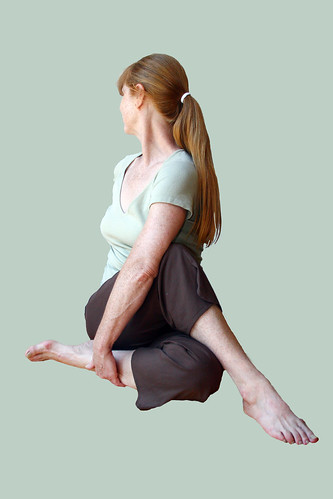
We’ve all done the sitting yoga twist (pictured right), which is a great stretch for this muscle group. Reciprocal stretches, like the ones for the inward rotators above, can be effective for the outward rotators as well. Lie supine with your knees up and press the insides of your knees together, holding this for 20-30 seconds. Then, open the feet and drop one knee (in inward rotation) toward the floor. Press again and then drop the other leg.
Don’t Force Or Fake Turnout
When dancers chase the almost impossible ideal of 180º turnout, and outward rotation is forced beyond the range of one’s bone structure, an abnormal erosion of the hip socket occurs. This is probably the reason for the high numbers of aging dancers with arthritic hips.
Creating false turnout (as mentioned in Part I) can also lead to problems. Excessive pronation can cause shinsplints, strained arches, bunions, misaligned knees, and strained ligaments. Issues such as these have a way of working their way upward through the body, and will in turn cause strain in the hips or cause pelvic tilt, which leads to back problems and iliopsoas shortening/pain. Rolling in to get that little bit of “extra” turnout is clearly not worth it.
Conclusions
At the beginning of this two-part article, I asked two questions: Is having extreme turnout really ideal?
What I hope you take away from this article is that it is not the degree to which you are capable of turning out, but the healthful and educated approach to achieving your potential for turnout that is important.
As for the importance of turnout itself, I believe it is only as important as we allow it to be. Even most ballet professionals, I think, would agree that having extreme turnout is trumped by mastering the ability to properly execute and maintain the degree of outward rotation that exists. This attitude, when applied to training or teaching, can transform a student’s technique. Coupled with the knowledge of how turnout works, it allows the dancer to dance longer and stronger.
It is never too early for a dancer to begin to make anatomical and kinesthetic connections to the movements they are producing in dance class.
Dancers should always strive for better efficiency in movement. It’s about making the effort count, rather than wasting it.
“If the turnout is mastered early and properly, the student, and later the dancer, does not have to waste energy on the placement but instead can concentrate on the muscle energy needed to jump higher to turn better, and to control the weight of the leg.”
You can get all of the above at The Body Series. I have been following Deb’s work online for years and have such faith in her as an information source for dancers, that I don’t mind at all telling you that that link is an affiliate link.
Tell me about your successes or frustration with turnout.
Do you think too much emphasis is placed on the degree of turnout? If so, what are some ways that teachers or educators can correct this?
Do you think the ballet aesthetic is changing?
What are some images, stretches, or exercises relating to turnout that have worked for you?
Nichelle Suzanne is a writer specializing in dance and online content. She is also a dance instructor with over 20 years experience teaching in dance studios, community programs, and colleges. She began Dance Advantage in 2008, equipped with a passion for movement education and an intuitive sense that a blog could bring dancers together. As a Houston-based dance writer, Nichelle covers dance performance for Dance Source Houston, Arts+Culture Texas, and other publications. She is a leader in social media within the dance community and has presented on blogging for dance organizations, including Dance/USA. Nichelle provides web consulting and writing services for dancers, dance schools and studios, and those beyond the dance world. Read Nichelle’s posts.

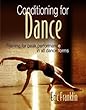 In Conditioning for Dance, Eric Franklin uses the image of the pelvic floor opening like a fan in turnout. With this tool one can visualize that the sitz bones come together as the femurs open away from each other. Attention is drawn to a very important portion of the body – the base of the centre – which will help students begin to harness the power of the pelvis in jumping, leaping, and other movements.
 Encourage students to find bony landmarks on themselves and one another. Find ways to isolate certain muscles through manipulation and touch while encouraging the use of mental pictures. Again, I will highly recommend Conditioning for Dance as a wonderful reference for this type of sensory learning. You will also find a variety exercises with bands and balls targeting specific areas of the body. For an in-depth understanding and analysis of joint and muscle actions, I constantly refer to Sally Fitt’s Dance Kinesiology. These make excellent additions to a teacher’s dance library.